
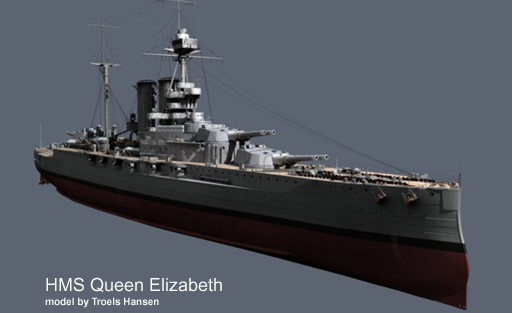
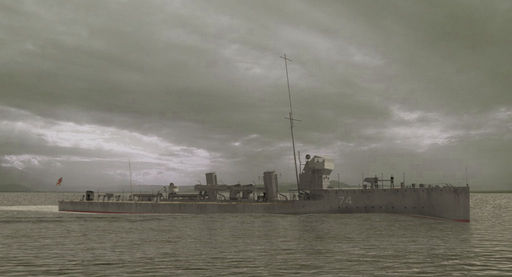
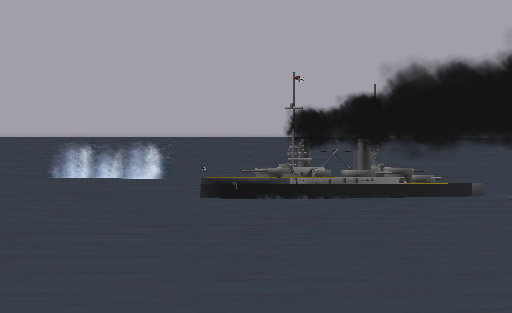
The naval technology of 1890-1920 is a subject few people study, and yet it is so rich and exciting that we want to share in a more inviting and accessible form what we've learned in reading many old manuals and handbooks. We've hit upon videos and essays as the best ways to bring this rich technological era to light.
You'll see why I found that making a simulation or game was helpful in showing how fire control instruments worked. Several of these really can best be described as "computers", but no one really ever considers this period as part of the computing epoch. Maybe that will change.
I enjoy presenting this work to interested audiences, whether they are comprised of admirals or geometry students. If you have such an audience and an occasion where you want something truly different, contact me.
Pictures and videos alone don't always convey the fullest understanding of the subject.
Scientific Topics
Before technology can be studied, one must understand the natural laws that shaped the world in which they functioned. In a sense, these are "backgrounders".
External Ballistics
By World War I, guns fired at ranges up to 10 miles, and for the first time gunners had to contend with shooting quick-moving aircraft in 3 dimensions. A fairly mature grasp of the science of ballistics was required.
Range Tables
To create accurate sighting equipment, one needed to know everything about the performance of a new gun throughout its entire envelope. This knowledge was acquired by test firings and statistical hocus-pocus and then documented in an artillerist's almanac called a "range table".
Ships, Technologies and Devices
The sophistication of naval technology in this period astonishes most when they first learn its details. Though things were far more advanced in the World War II era, it is worthwhile directing some attention to a precocious period of technological development and attainment that has escaped common notice.
The Design and Weaponry of HMS Colossus (1882)
Rob Brassington contributed this incredible study of a Victorian era battleship. His animations and modeling are supported by an essay that really helps you see how this ship was envisioned to fight.
The Sightsetting Principle
Single guns had sighting telescopes with crosshairs by which they aimed at targets, but before this would work, you had to tell the sight how far away the target was, and how much lateral "lead" you might need. This was called Sightsetting.
Dumaresqs
There were many marks of this clever calculator, including some special-purpose variants.
Shipboard Data Networks
One of the aspects of my studies that has most surprised me is the discovery the remarkable resemblance of a dreadnought to a local area network. Though the terminals in these networks were not as flexible as the computers of our modern day networks (today, we might just say they were "hard wired"), the function and value of these systems allowed an entire ship to operate as a coherent author of destruction.
Rangefinders
With few real exceptions, detection and tracking of an enemy in battle relied on visual means. The primary requirement for shooting effectively is the timely collection of accurate information on the enemy's relative position and motion.
I'm lucky enough to own several rangefinders from the WW-I era, and when
friends visit, I drag them out to test them in an occasional episode of something I call
The Rangetaker Challenge.
Director Firing
Just as WW-I began, the Royal Navy was equipping its ships with director firing systems which permitted entire batteries of weapons to fire together to better concentrate their fall of shot and facilitate spotting. Director firing was an idea touched on at several times in the previous 50 years, but most often credit for its successful introduction is accorded to Captain Percy Scott.
Dreyer Fire Control Table
The Royal Navy equipped its capital ships with these plotting and computing "workbenches" and relied on them at Jutland. Most Dreyer tables had two separate visual plots for recording range and bearing versus time, as well as a Dumaresq, range clock, and other peripherals to relate and clean up the data for generating a continuous estimate of range and deflection to be used by the guns.
Argo Aim Corrector
The Argo Aim Corrector was a system of fire control marketed to the Royal Navy immediately before WW-I, but although portions of its equipment were used sporadically in the Grand Fleet, it was rejected in favor of the Dreyer Fire Control Tables. It featured an automatic true-course plotting table, a compact and well engineered Argo Clock.
Flag Signaling
When a ship wished to say something to another ship or group of ships, and they were in visible range in good light, flag signals were almost always the means of communication employed, just as they had been for at least a century.
Wireless
Radio was a fairly new technology, but many ships and even some aircraft carried transmitters and receivers to permit long-range coordination (or interference, depending on one's perspective)
Methods of Naval Operation and the Use of Technology
Giving sailors ships and weapons is not where it ends. How were these tools to be used? What training was given to men and how were they told to apply their might against the enemy?
Fleet Maneuvering